
| Topics | Organization | Keynotes | Registration | Submission | Indexing | History | Venue |

In deep bimodal information environment, we face with fuzzy and probabilistic uncertainties. Fuzzy-probabilistic framework is important to process both expert-driven and data-driven information. To solve real-life problems in this situation, Z-number construct was proposed by prof. L. Zadeh as a novel form of a granule. Existing classical Z-number theory is based on Type-1 fuzzy sets for describing a both a value of variable of interest and restriction on probability measure of this value. However, type-1 fuzzy sets-based description may not be adequate for real-world uncertainty. That is, due to political, economic and ecological instability factors, one may find difficulties to precisiate existing internet uncertainty linguistic evaluation by using type-1 fuzzy numbers, that is, to use precise degrees of membership. In contrast, type-2 fuzzy numbers are more adequate to reflect imprecision of membership functions of both A and B parts due to instability factors. To handle more adequately deep uncertainty in bimodal information situation we need to provide this framework by additional layer of uncertainty which includes both type-2 fuzzy sets. In this study, for first time we suggest Type-2 Z-number conception to extend the capabilities of existing Z-number framework. We formulate a definition of type-2 Z-number where a possible probability distribution is assigned a degree of possibility in form of type-1 fuzzy number. Indeed, precise degree of possibility can hardly be assigned under high uncertainty of perceptions related to actual probability distribution. For this representation, a framework of basic arithmetic operations over type-2 Z-numbers is developed.
SHORT BIO ABOUT THE AUTHOR :

We assume as the point of departure the classic Bellman and Zadeh’s [2] problem of multistage decision making and control under fuzzy constraints on inputs (decisions or controls) and fuzzy goals on the outputs (states, for simplicity), in a more comprehensive form presented in Kacprzyk [10]. As opposed to the basic case of a fixed and specified termination time (planning horizon), for instance „10 years” in the case of economic planning, we assume a fuzzy termination time exemplified, for instance, by „more or less 10 years”, „much more than 5 years”, „much less than 15 years”, etc. Such a fuzzy termination time is quite often what is really perceived by the human stakeholders, for instance, decision makers, in real life even if, for formal reasons, a fixed and specified termination time, here „10 years” is set. The fuzzy termination time, introduced by Kacprzyk [3,4,5] is assumed to be a fuzzy set in the set of control (decision making) stages which is assumed to be finite. We assume, first, that the system under control is deterministic and its dynamics (stage transitions) is given as state transition matrix, both the same at all control stategs and also time varying, that is, different for different control stages.
To extend the expressive power of the formulation, and to acccount for a partial reliability, the fuzzy constraints and fuzzy goals are represented by the Z-numbers defined in finite sets of states and controls, and then, we also mention an extended formulation with the system under control represented by a Z-relation. We assume in the first shot that the fuzzy termination time is defined just as a fuzzy number defined in the set of control stages.
First, we recall the source Z-number based basic approach to the problem of multistage fuzzy control with a fixed and specified termination time by Aliev, Pedrycz, Guirimov, Huseynov and Aliyev (2024) in which the termination time is assumed to be fixed and specified, exemplified by „10 years” as in our example.
Then, we consider the 3 basic approaches to the formulation and solution of the multusgae fuzzy control (decision making) problem with a fuzzy termination time proposed by Kacprzyk [3, 4, 5, 10]:
· dynamic programming,
· branch-and-bound,
· evolutionary computation (mostly genetic algorithms).
We start with the presentation of a Z-number extension of Kacprzyk’s [3, 4, 5] basic fuzzy dynamic programming model of the multistage fuzzy control (decision making) problem with a fuzzy termination time combined with some Z-number related solutions employed for the fuzzy dynamic programming by Aliev, Pedrycz, Guirimov, Huseynov and Aliyev [1]. This new approach proposed involves an additional degree of membership of a particular control stage in the fuzzy termination time.
Next, we show first a Z-numbr based extension of the branch-and-bound approach (cf. Kacprzyk [6]) to the formuation and solution of the problem of multistage fuzzy control (decision making) with a fuzzy termination time which can be a good alternative to dynamic programming for larger problems because it makes it possible to alleviate the infamous course of dimensionality of dynamic
programming, including clearly fuzzy dynamic programming and the Z-number based dynamic programming alike. We show mainly how to implement the partitioning of a problem into smaller problems, and to devise and implememt a bounding function in the case of the Z-numbers.
Then, we show a Z –number based extension of a conceptually simple genetic algorithm approach by Kacprzyk [11].
Finally, we briefly indicate possible further extensions related to the use of the Z-numbers for the formulation and solution of multistage fuzzy control (decision making) with a fuzzy termination time in the case of the stochastic and fuzzy systems under control, and also a very interesting case of a fuzzy termination time specified as a Z-number. We mention a possible Z-number based extension of a neural network approach to the solution of the multistage fuzzy control (decision making) problem, an extension of Francelin, Kacprzyk and Gomide [12, 13], as well as the use of belief qualification introduced by Kacprzyk and [14]. We also mention some applications, notably in inventory control.
References
1. R.A. Aliev, W. Pedrycz, B.G. Guirimov, O.H. Huseynov, R.R. Aliyev, Z-relation-based multistage decision making, Information Sciences, vol. 653, p. 119799, 2024.
2. R.E. Bellman and L.A. Zadeh (1970) Decision-Making in a Fuzzy Environment,” Management Science., vol. 17, no. 4, p. B-141-B-164.
3. J. Kacprzyk (1978) , Control of a stochastic system in a fuzzy environment with a fuzzy termination time, Systems Science, Vol. 4, 291-300, 1978.
4. J. Kacprzyk, Control of a nonfuzzy system in a fuzzy environment with a fuzzy termination time, Systems Science, Vol. 3, 320-334, 1977.
5. J. Kacprzyk, Decision-making in a fuzzy environment with fuzzy termination time, Fuzzy Sets and Systems, Vol. 1, 169-179, 1978.
6. J. Kacprzyk, A branch-and-bound algorithm for the multistage control of a nonfuzzy system in a fuzzy environment, Control and Cybernetics, Vol. 7, 51-64, 1978.
7. J. Kacprzyk and P. Staniewski, Long-term inventory policy-making through fuzzy decision- making models, Fuzzy Sets and Systems, Vol. 8, 117-132, 1982.
8. J. Kacprzyk, A generalization of fuzzy multistage decision making and control via linguistic quantifiers, International Journal of Control, Vol. 38, 1249-1270, 1983.
9. J. Kacprzyk and R.R. Yager, Linguistic quantifiers and belief qualification in fuzzy multicriteria and multistage decision making, Control and Cybernetics, Vol.13, 155-173, 1984.
10. J. Kacprzyk, Multistage Fuzzy Control: A Model-Based Approach to Control and Decision-Making, Wiley, Chichester, 1997.
11. J. Kacprzyk, Multistage Control of a Stochastic System in a Fuzzy Environment Using a Genetic Algorithm, International Journal of Intelligent Systems, vol. 13, 1011-1023, 1998.
12. R.A.F. Francelin, J. Kacprzyk and F.A. Gomide, Neural network based algorithm for dynamic system optimization. Asian Journal of Control, vol. 3, No. 2, 131-142, 2001.
13. R.A. Francelin, F.A.C. Gomide and J. Kacprzyk, A biologically inspired neural network for dynamic programming. International Journal of Neural Systems, vol. 11, no. 6, 561—572, 2001.
SHORT BIO ABOUT THE AUTHOR :

Machine Learning (ML) and Artificial Intelligence (AI) have enjoyed a lot of interest and led to numerous success stories including those in areas of high criticality. With the passage of time, some limitations of the ML technology have become visible and raised concerns about the deployment of the ML constructs (including LLMs) and their exclusive reliance on data. Indeed, data are a lifeblood of design methodologies and drive current commonly encountered development practices. At the center of the ML methodology lies a default assumption that the data fully represent the problem to be solved (e.g., classification or prediction). We look at the problem and produce a solution through the lens of data; in many cases, this may lead to the data blinding effect. We advocate that a holistic knowledge-data development perspective is urgently needed. An Informed ML (IML) has emerged as a new direction of research addressing these needs. In brief, IML is sought as a methodology in which data and knowledge are used in unison to design ML systems. From the design perspective encountered in the ML learning environment, data and knowledge are radically different. Data are numeric and precise. Knowledge is general and usually expressed at the higher level of abstraction (generality). Knowledge and data emerge at different levels of information granularity. In this talk, we deliver a comprehensive taxonomy of main pursuits of IML and link them with key ways the knowledge is represented. A historical perspective is offered by studying the symbolic and subsymbolic processing encountered in successive decades of AI. The two general categories of physics-oriented and neuro-symbolic constructs associated with the ways in which knowledge and data are explored together. We elaborate on the design process being guided by a prudently augmented additive loss function whose corresponding parts minimize distances between the developed ML model and numeric target values and deliver adherence of the model to information granules reflecting available knowledge. A general taxonomy of neuro-symbolic systems involving: learning-for-reasoning, reasoning-for-learning, reasoning-learning is discussed.
SHORT BIO ABOUT THE AUTHOR :

The problem of educational assessment has a challenge for better understanding and improving student performance. The traditional methods can not address this challenge, because they rely on numerical grading and quantitative metrics, consequently can not effectively capture real nature of student success. The paper aims to present a novel approach to measure student performance based on use of fuzzy logic, namely of its Z-number valued extension, to accommodating uncertainty and vagueness in educational environments. The use of Z-number extension of fuzzy sets provides ability to involve multiple qualitative and quantitative measures of student performance, taking into consideration their inherent imprecision and vagueness, and reliability of information. The results demonstrate validity of fuzzy Z-number-valued student performance estimation model through a case study using diverse student information from a higher education school.

Classical Artificial Intelligence models primarily rely on probabilistic frameworks to represent uncertainty. However, many real-world systems involve not only randomness but also imprecision, linguistic ambiguity, and varying levels of information reliability. Traditional AI methodologies do not adequately capture these structured forms of uncertainty.
This talk introduces Z-AI, a mathematical framework for Artificial Intelligence based on Z-information theory, where each piece of information is modeled as a pair consisting of a restriction component and a reliability component. By embedding credibility directly into the learning and inference process, Z-AI enables intelligent systems to distinguish between uncertain data and unreliable data.
The presentation outlines the theoretical foundations of Z-numbers, their linguistic extensions, and their integration into machine learning and optimization models. Applications in decision support and healthcare systems are discussed to illustrate how reliability-aware uncertainty modeling can enhance robustness, interpretability, and trust in AI systems.
Z-AI represents a step toward mathematically rigorous, reliability-conscious intelligent systems capable of operating in complex, uncertainty-rich environments.
SHORT BIO ABOUT THE AUTHOR :

The consequences of natural disasters have significantly increased the loss of human life and material damage in recent years. Such disasters as earthquakes, tsunamis, tornadoes and others can cause serious and lasting damage to regions and countries. Therefore, it is important to know how the transport fleets are organized and managed in the disaster areas, as it makes a crucial contribution to the efficiency of the relief distribution process. When the suitable places of distribution centers (DCs) are selected, a group of places should be selected from them that in some sense better meet the requirements such as: maximizing the reliability index of the selection of DCs, minimizing costs, maximizing demand coverage etc. Given the issues outlined in this study, we will consider a fuzzy temporal multi-objective emergency location and vehicle routing problem (FTMOELVRP). It is essential to allocate disaster affected areas and vehicles for DCs. It generates routes from DC to disaster-affected areas, taking into account distributed demand-supply. The purposes of the model are: (1) maximizing the total selection reliability index of opened DCs, (2) minimizing the fixed costs to establish DCs and the vehicle travelling cost, (3) minimizing the maximum travel time of the vehicle routes, and (4) maximizing the minimum possibilistic reliability of the routes for all service vehicles in the process. Objective functions of (1) and (4) are novel and their construction and study issues are one of the important tasks of this work. The input to the mathematical model of the system are objective data, as well as expert evaluations. The outputs of the system will solve the FTMOELVRP for disasters’ zones. The Intelligent Support System for the FTMOELVRP in disaster zones will be developed in our future research.
SHORT BIO ABOUT THE AUTHOR :
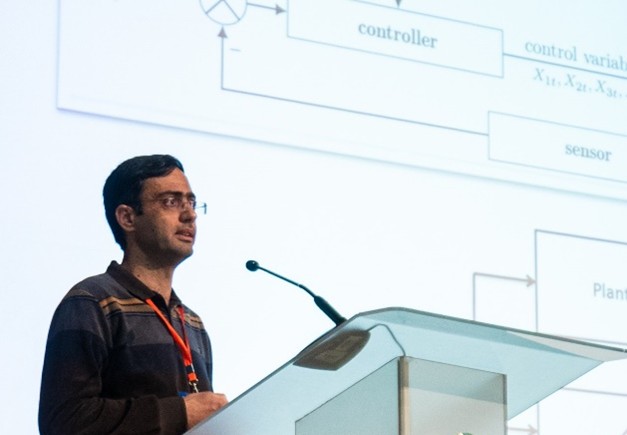
This keynote, titled “Advancement in Type-3 Fuzzy Systems and Control,” surveys the rapid evolution of type-3 (T3) fuzzy systems and their growing adoption across a broad range of scientific and technological domains. In recent years, T3 fuzzy frameworks have attracted significant attention due to their enhanced ability to model deep uncertainty, complex nonlinearities, and highly variable operating environments, capabilities increasingly demanded in modern intelligent systems. The talk first reviews the principal methodological advancements in T3 fuzzy systems, highlighting key developments in representation, learning, inference, and computational implementation that have enabled practical deployment. It then introduces Type-3 Adaptive Neuro-Fuzzy Inference Systems (T3-ANFIS) as a unifying learning-and-inference architecture that extends classical ANFIS to higher-order uncertainty modeling. Finally, the keynote presents and critically discusses a recently developed intelligent control scheme based on T3-ANFIS, emphasizing design rationale, validation results, and a real-world implementation to demonstrate feasibility, robustness, and performance in practical control applications.
SHORT BIO ABOUT THE AUTHOR :

Traditional fuzzy reasoning is based on compositional inference. In high-order fuzzy systems, this inference mechanism requires both type-reduction and defuzzification operations. In type-3 fuzzy systems, a three-dimensional membership function is first reduced to a two-dimensional representation, then to a one-dimensional form, and finally converted into a crisp output. As the number of variables and rules increases, compositional inference becomes computationally expensive. This research investigates the use of similarity in approximate reasoning. Similarity-based fuzzy reasoning is an alternative inference approach in which conclusions are drawn by measuring how closely a new input resembles previously defined fuzzy rule antecedents, rather than relying solely on strict rule matching. This approach is particularly effective when rule structures are complex (high-order) and inputs do not clearly match existing rules. It compares observed input patterns with stored fuzzy rule antecedents and determines outputs according to their degree of similarity. The proposed mechanism more closely reflects human reasoning, is robust to uncertainty and incomplete knowledge, demonstrates strong generalization capability, and effectively handles nonlinear, high-order interactions. Compared with compositional inference, similarity-based reasoning offers stronger interpolation capability and is more robust to sparse rule bases. In this research, common similarity measures—including set-theoretic and distance-based measures—are investigated to design an inference mechanism for type-3 fuzzy systems, and real-time applications of similarity-based reasoning are examined.
SHORT BIO ABOUT THE AUTHOR :

For some time now, we have been focusing on the intersection between linguistics and fuzzy logic in these studies. We began with the study titled “Some Contributions of Fuzzy Logic and Artificial Intelligence Research to Linguistics” and continued with “Metaphors in the Context of Systems, Language, and Fuzzy Logic.” We can say that the most important characteristic of a system being a system and distinguishing it from others is the communication and interaction within the system and between the system and the external world—in other words, the flow of data. For example, a machine—especially one equipped with data-processing artificial intelligence—must transform the data it receives from the external world into a format it can process, process that data, and then present the information it generates to the external world in a format compatible with that world. Just like a human. A human also processes information received from the external world through the five senses via a process that begins with perception and progresses through language. We can refer to this process as a granularization process. At each stage, the data changes form, becoming granules suited to the environment. It is precisely in this process—that is, in the flow of data within the system—that we will focus on the importance of the tension between formal logic and fuzzy logic.
SHORT BIO ABOUT THE AUTHOR :

Main books:
- Economic Sketches, 1996
- Azerbaijan's Ranking (in International Comparative Studies), 2006
- Rehabilitation of Post-Conflict Territories of Azerbaijan, 2010
- Social Orientation of the Economy in Right-Wing and Left-Wing Systems, 2014
- Post-Conflict Territories: Economic Potential and Comparative Advantages, 2023
- Government Regulation of Pricing: Cross-Country Analysis and Outcomes for Azerbaijan, 2024